Contents
Key facts
- Conflicts rarely ignite over noise, but over the feeling of not having been asked.
- What really bothers people are three unspectacular things: the rubbish, the stairwell at odd hours, the laundry room.
- Wheeled cases on stone steps at five in the morning are louder than a party and catch the neighbours asleep.
- The tone decides the outcome: acknowledge the disturbance, name a concrete measure, give a phone number.
What conflicts actually ignite over
From first-hand accounts in host communities a pattern emerges that runs against intuition: complaints are rarely triggered by one loud night. They are triggered by somebody realising that strangers are constantly coming and going in the flat next door, without anyone having told them.
The loud night is then the occasion, not the cause. That explains why the same disturbance leads to a conversation in one building and to a formal complaint in another.
In practice that means: the most effective moment with the neighbours lies before the first booking. Ringing the bell, a short explanation, a telephone number in case something comes up — that costs an afternoon and prevents more than any set of house rules.
What really bothers neighbours
It is not noise at 11 p.m. that heads the list in the accounts, but three unspectacular things.
- The refuse. Guests do not know the separation rules or the collection days. A wrongly filled container is a greater nuisance in an apartment building than a loud voice in the stairwell, because it affects everyone and stays visible for days.
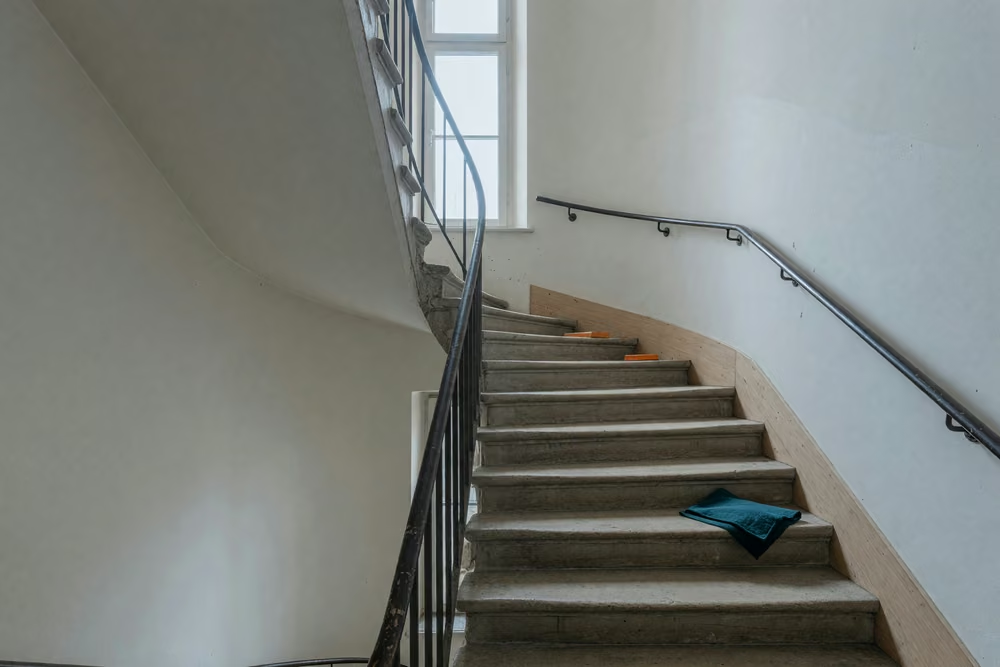
- The stairwell at unusual hours. Wheeled suitcases on stone steps at five in the morning are louder than a party and catch the neighbours asleep.
- The laundry room. Where it is communal and used on a rota, guest laundry is a permanent source of conflict. In buildings with a laundry rota, guest laundry belongs elsewhere — washed externally or with a machine of your own in the flat.
Your figures, not our examples
The calculator takes the number of rooms, the neighbourhood and the fit-out and shows you a range — with the arithmetic beside it, not as a single figure you have to take on trust.
Estimate the returnThe tone that decides the outcome
When a complaint comes, the first reply decides the rest. Two mistakes stand out in the accounts: disputing the complaint, and answering it with the rulebook.
Disputing it costs you the chance to keep the matter small. Anyone denying a disturbance that did occur loses their credibility for every future case.
Answering with the rulebook — «I am allowed to do this» — is sometimes legally correct and in practice the worst reply. It turns a neighbourly problem into a legal dispute, and nobody living in the same building wins one of those.
What works in the accounts: acknowledge the disturbance, name the specific measure, and give a number. Not «it will not happen again», but «I have blocked arrivals after 10 p.m., and if anything comes up again, call me directly».
Frequently asked questions
Acknowledge the disturbance, name a specific measure, give a direct telephone number. From first-hand accounts, two replies are particularly damaging: disputing the complaint, and answering with the rulebook. Disputing costs you your credibility for every later case. Answering «I am allowed to do this» is sometimes legally correct and in practice the worst choice — it turns a neighbourly problem into a legal dispute, and nobody living in the same building wins one. What works is specificity: not «it will not happen again», but which rule you have changed.
Not the noise, but three unspectacular things. The refuse: guests do not know the separation rules or the collection days, and a wrongly filled container affects everyone and stays visible for days. The stairwell at unusual hours — wheeled suitcases on stone steps at five in the morning are louder than a party and catch the neighbours asleep. And the communal laundry room, where washing runs on a rota. The real trigger, though, lies before all of that: the feeling of not having been asked. A conversation before the first booking prevents more than any set of house rules.
A single neighbour not directly, but they can set in motion procedures with the same result. With condominium ownership they can seek a resolution of the association or rely on existing provisions in the rules about commercial use. Under a tenancy they can inform the managing agent. And they can point the municipality towards a possibly missing permit for the use — in the current Zurich position that is the most effective route. This is why a good relationship with the neighbours is not a matter of pleasantness but of risk management.
And for your property?
Sources
State of our research: 19 July 2026. Official rules change — check the current position with the competent authority.